


With the continuous growth in global demand for mineral resource exploration and increasingly complex exploration environments, fully hydraulic exploration drills, as the core equipment of modern geological survey, are undergoing profound technological transformation. High efficiency, intelligence, modularity, and multifunctionality have become the mainstream trends in industry development. Fully hydraulic exploration drills are mainly divided into four categories: surface core drills (top-drive and chuck-type), underground core drills, portable core drills, and multi-purpose geological drills.
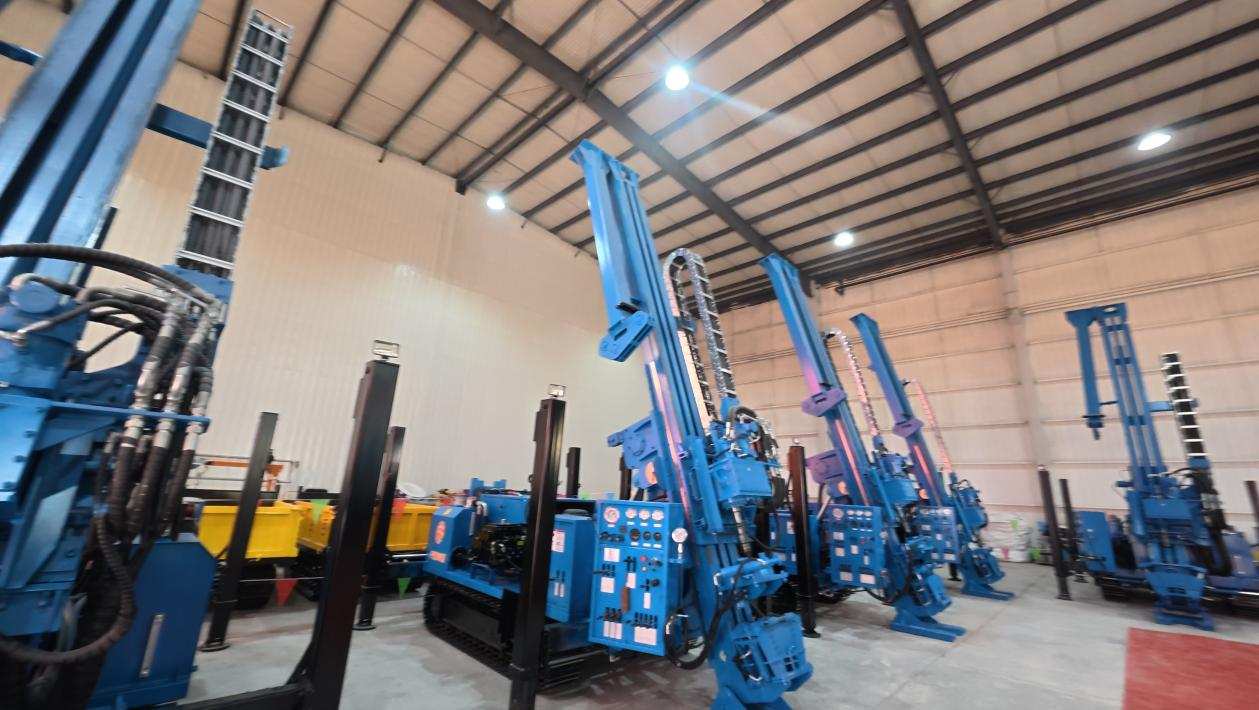
I. Surface Core Drills: The Stable Cornerstone for Deep-Hole Exploration
Surface core drills are the primary equipment for mineral resource prospecting and detailed exploration. Based on their core drilling drive methods, they are mainly divided into two technical schools: top-drive and chuck-type, each excelling in deep-hole and medium-deep-hole exploration.
1. Surface Core Drill (Top-Drive): The Precision Tool for Deep-Hole Exploration
The top-drive fully hydraulic core drill deeply integrates authoritative design concepts with precision manufacturing processes, representing the high-end technical level of deep-hole core drilling. Its core design philosophy lies in simplifying operational and maintenance complexity through modular layout and user-friendly interfaces, enabling it to calmly meet the severe challenges of deep, complex, and fractured formations.
Core Advantages Focus:
①Efficient and Precise Transmission System: The power head, as the core, adopts a high-performance gear transmission system with optimized design. It not only offers exceptional transmission efficiency but also ensures extremely smooth power output, enabling sustained and efficient operation.
②Exceptional Stability in the Feed System: Utilizes a rigid box-type mast with embedded high-precision guide rails. This structure provides outstanding torsional and bending resistance, ensuring extremely high straightness and stability during the tool feed process, which is key to obtaining high-quality cores and ensuring borehole integrity.
③Hydraulically Controlled Balanced Pressure Drilling System: Incorporates a unique automatic balanced pressure drilling technology. This system can sense and balance the weight of the drill string in the hole in real-time, achieving precise micro-adjustment of drilling pressure. This significantly enhances the drill’s adaptability and drilling efficiency in deep hole sections and complex, unstable formations, effectively reducing downhole incidents.
In terms of configuration, top-drive drills are typically equipped with large-bore hydraulic chucks and breakout devices for efficient and safe rod clamping and unscrewing. Power options include high-power diesel engines or electric motors to meet different field power conditions. The feed mechanism primarily uses direct-acting hydraulic cylinders for precise control. To expand application range, they can be configured with down-the-hole hammers for hard rock drilling or integrated with fully automatic SPT (Standard Penetration Test) functionality, enabling integrated drilling and in-situ testing.
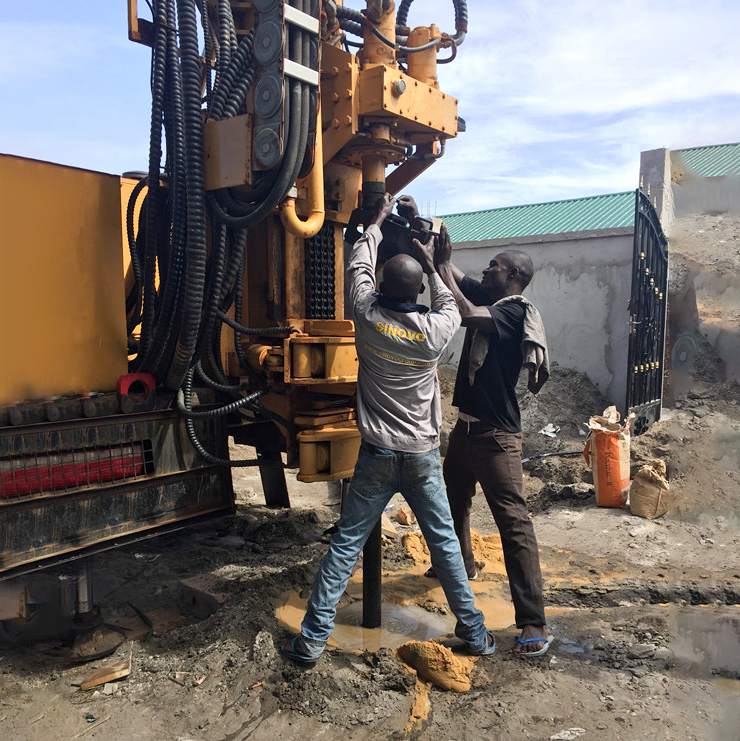
2. Surface Core Drill (Chuck-Type): The Flexible and Efficient Mainstay
The fully hydraulic chuck-type surface core drill occupies an important position in the medium-deep hole exploration market due to its flexible operation and broad adaptability. Its control forms are evolving towards automation, mainly including:
①Hydraulic Dominant Control (HDC): Reliable and easy to maintain.
②Hydraulic Pilot Control (SHE): Offers lighter operation and more responsive control.
③Digital Intelligent Control (IAM): Employs sensors and controllers to achieve digital parameter setting, storage, and feedback, representing intelligent advancement.
This type of drill rig employs a precise closed or open hydraulic control system, offering flexible operation and high production efficiency. To adapt to complex terrains, it features a variety of chassis options. It can be equipped with a rubber-tracked chassis for low ground pressure and agile steering, or a wheeled truck chassis for swift transitions between highway sites, greatly enhancing the mobility of the drilling team.
In core configuration, the chuck is its defining feature, typically a main/sub chuck structure paired with a hydraulic breakout device for mechanized rod handling, reducing labor intensity. Engine selection depends on working conditions. The feed mechanism also uses hydraulic control for good stability. By selecting down-the-hole hammer modules, it can tackle hard rock formations; integrating a fully automatic SPT system transforms it into a powerful tool for engineering geological investigation.
II. Underground Core Drill: The Exploration Artist for Confined Spaces
The fully hydraulic, all-angle underground core drill is specifically designed for narrow underground spaces such as mine tunnels and shafts. Its technological development highly focuses on intelligence, compactness, and all-angle operation capability.
Outstanding technical highlights as follow:
①Strong power and wide speed range: Provides ample torque reserves and a broad speed range to effectively handle the variable and complex underground formations.
②Efficient and Safe Rod Handling: Utilizes nitrogen-spring-driven rod clamps that are fast-acting, providing large and stable clamping force. They achieve perfect synchronization with the power head, ensuring safe and reliable drilling and rod adding/removing processes.
③Extreme Compactness and Modularity: Employs a multi-purpose, modular layout design, allowing the drill to be flexibly deployed within extremely confined tunnel cross-sections and to easily perform drilling at any angle—horizontal, upward, or downward—meeting diverse needs like geological prospecting and advance detection.
Its configuration also supports optional down-the-hole hammers for hard rock drilling and can integrate highly automated SPT functionality for underground engineering geological assessment.
III. Portable Core Drill: SDS-8 Full Hydraulic Core Drilling Rig, the Paragon of Lightweight and Modular Design
For exploration projects in remote areas with difficult access, the fully hydraulic modular portable core drill offers the optimal solution. Its development trend focuses on ultimate lightweight design, high power adaptability, and rapid disassembly/deployment.

①Flexible and Diverse Power Configuration: Can use diesel engines or electric motors as power sources, and can be designed as split or integrated power packs. This modular power design allows users to optimize the combination based on site power availability, relocation difficulty, and operational preferences.
②Structural Material Innovation: The main structure extensively uses high-strength lightweight materials like aluminum alloy and special steel, maximizing weight reduction for easier manual handling or transport by light vehicles while ensuring rigidity and strength in key areas.
③Technology Integration Empowerment: Incorporates integrated power control technology, intelligent hydraulic control technology, and balanced pressure drilling control technology for complex formations. This allows portable models to possess performance and productivity approaching that of larger drills while maintaining a compact footprint.
The chuck and breakout devices of portable drills place greater emphasis on lightweight and integrated design. Engines are typically smaller, low-consumption models. Feed mechanisms often use compact cylinders or rack-and-pinion systems. As functional extensions, they can also be adapted for light down-the-hole hammers or manual/semi-automatic SPT tools.
IV. Multi-Purpose Geological Drill: The Versatile Swiss Army Knife of Exploration
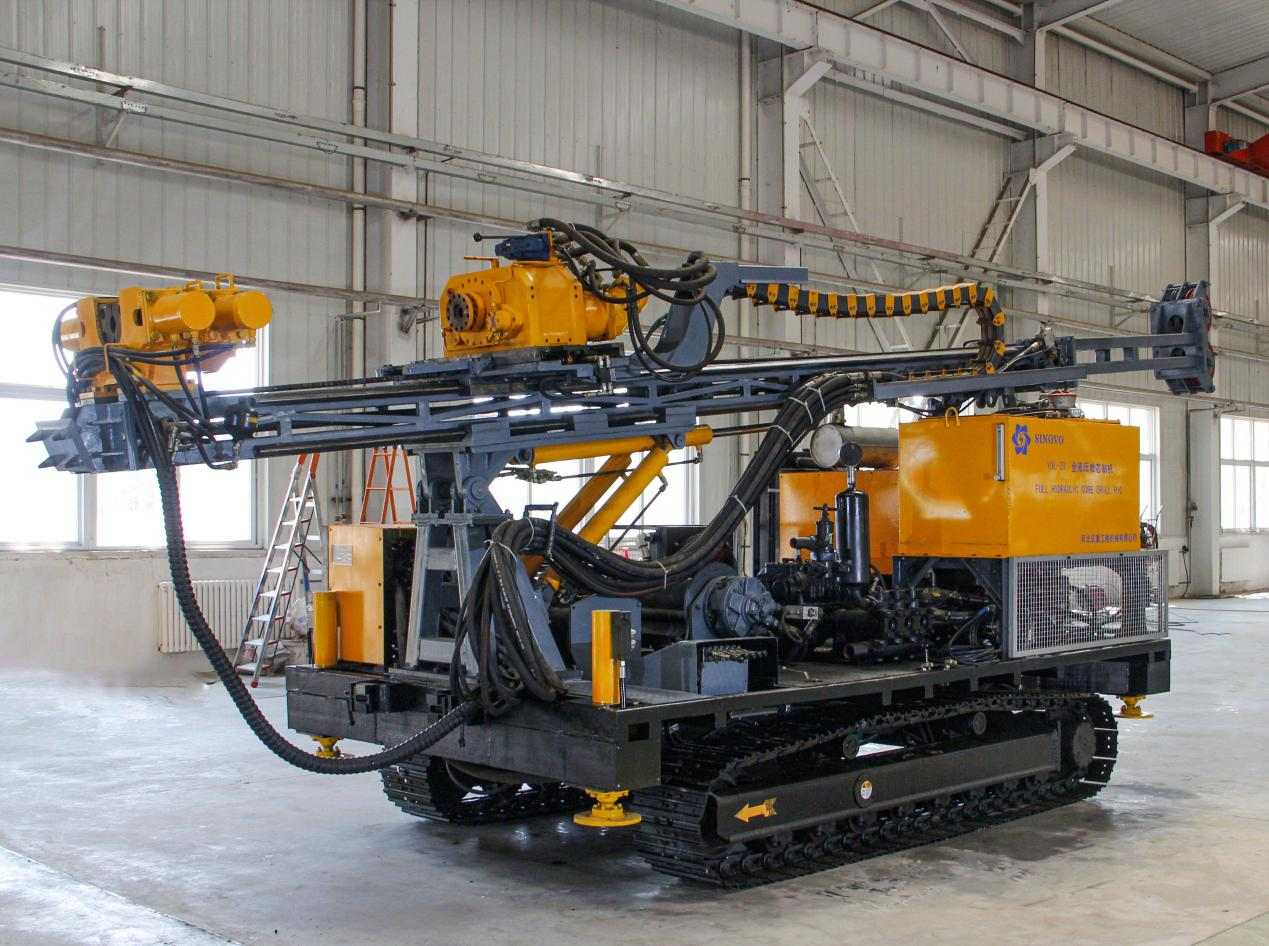
Multi-purpose exploration drills represent the development direction of equipment generalization and high efficiency. SD400-2000 full hydraulic crawler driving core drilling rig is mainly used for diamond bit drilling with wire line. Because of the use of foreign advanced technology, especially the mature rotation head unit, clamp machine, winch and hydraulic systems, the drilling rig is widely used. It is not only applicable to the diamond and carbide drilling of solid bed, but also to seismic geophysical exploration, engineering geological investigation, micro-pile hole drilling, and construction of small/medium wells.
Distinctive Core Features as follow:
①High Degree of Functional Integration: A single host unit, by changing different tools and processes, can perform various tasks including core drilling, auger drilling, roller-cone drilling, percussion drilling, and Standard Penetration Tests (SPT). It is widely used in water well exploration, shallow geological survey, geotechnical engineering investigation, geothermal exploration, and other fields.
②Compact and Agile Design: The entire machine features a compact and lightweight design for easy transport by vehicles like pickup trucks. It can be flexibly deployed in confined or special work environments such as urban streets, indoor sites, and slopes.
③Comprehensive and Customizable Configuration: Typically equipped with versatile hydraulic chucks and breakout devices. The engine balances power and size. Feed methods are diverse and adjustable. Its greatest advantage lies in the convenient configuration of down-the-hole hammers for percussion drilling or integration of fully automatic SPT systems, enabling seamless switching from drilling to testing, greatly enhancing the overall efficiency of engineering surveys.
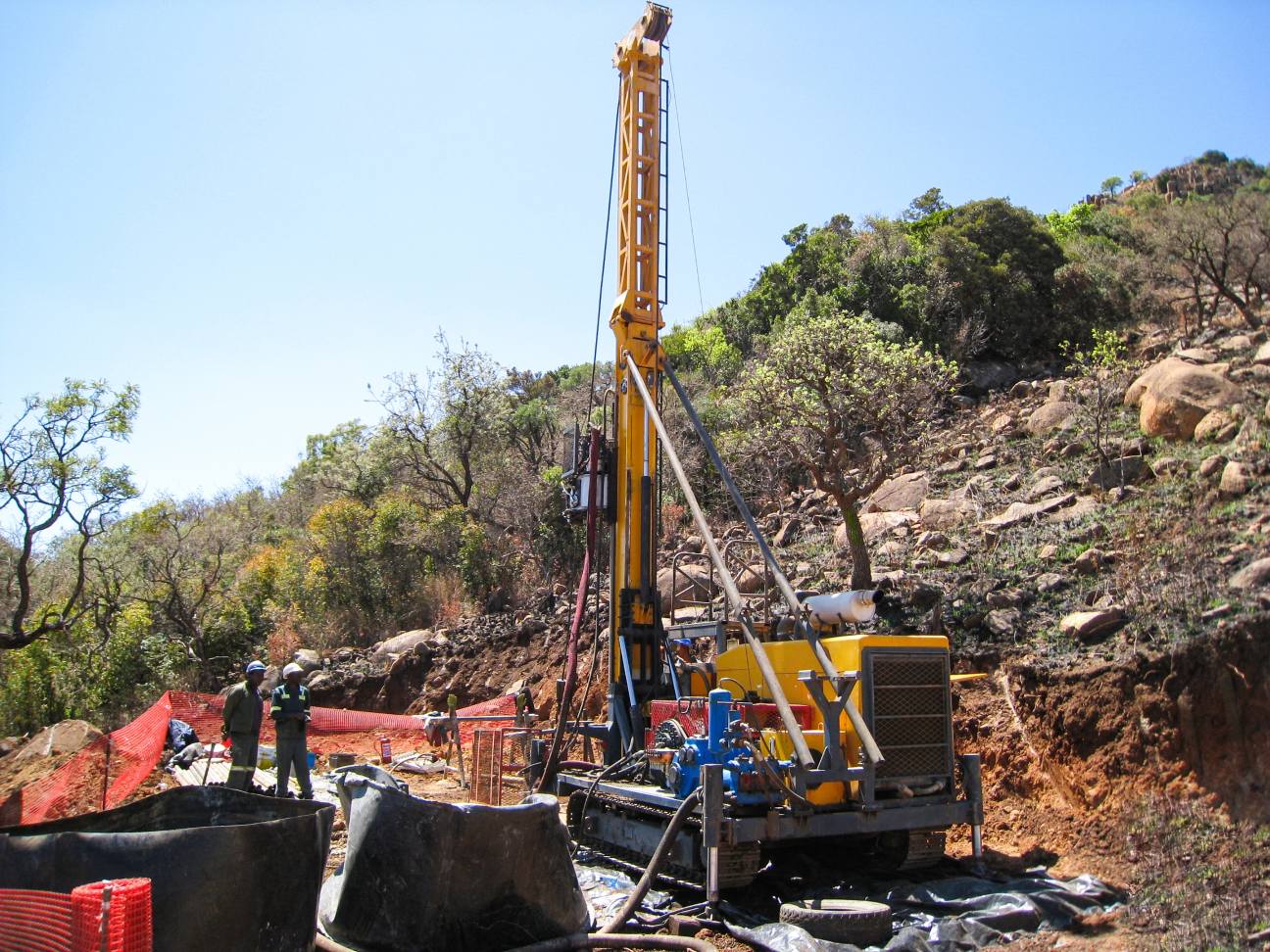
In summary, the development of fully hydraulic exploration drills is rapidly advancing along a clear technological path: surface drills pursue greater depth, stability, and intelligence; underground drills strive for all-angle, automated operation in extreme spaces; portable drills continuously push the boundaries of weight and performance; and multi-purpose drills create maximum application value through high integration. All four categories continue to innovate in areas such as chuck and breakout device reliability, engine environmental friendliness and efficiency, precise control of feed mechanisms, and integration of extended functions like down-the-hole hammers and fully automated SPT systems.
In the future, with the further penetration of Internet of Things, big data, and artificial intelligence technologies, fully hydraulic exploration drilling rigs will not only serve as construction tools, but also as data acquisition terminals and intelligent decision-making nodes, propelling the geological exploration industry towards a new digital era that is safer, more efficient, and greener.
Post time: Jan-05-2026